United Nations, Feb 28 (EFE).- The United States and Iran traded fierce accusations at an emergency UN Security Council session on Saturday, laying bare deep global divisions as military strikes in the Middle East fueled fears of a broader regional war.
As Washington defended its joint strikes with Israel as necessary to stop Iran’s nuclear ambitions, Tehran denounced them as “war crimes” and vowed continued self-defense, turning the chamber into a battleground of sharply opposed narratives.

UN Secretary-General António Guterres opened the session warning that the escalating cycle of attacks and counterattacks posed a “threat to global peace” and could spiral into a crisis with “serious consequences” if not contained. He urged all sides to respect international law and resume negotiations over Iran’s nuclear program.
US Ambassador Mike Waltz said the strikes were intended to ensure the Iranian regime would “never be able to threaten the world with a nuclear weapon,” accusing Tehran of rejecting diplomacy and endangering regional security, including maritime routes.
«American diplomacy was attempted repeatedly and in good faith,» he said. «Diplomacy cannot succeed where there is no genuine willingness to cease aggression, where there is no genuine partner for peace,” Waltz said.
He argued that Iran had “rejected all opportunities offered” and accusing Tehran of “threatening regional allies” and “endangering the security of international maritime transport.”
«Those who stand with us must know that their security is not negotiable. The safety of our allies is not conditional. It is assured.»
While the meeting was underway, US President Donald Trump claimed on social media that Iran’s Supreme Leader, Ayatollah Ali Khamenei, had died in the attacks, calling him “one of the most evil people in history” and saying his death created “the greatest opportunity” for Iranians to reclaim their country.
Iran’s UN ambassador, Amir-Saeid Iravani, condemned the US and Israeli strikes as “a war crime and a crime against humanity,” citing civilian casualties, including children. He said Iran would continue to exercise its right to self-defense “until the aggression ends.”
Iravani said Tehran’s retaliatory strikes had targeted US military bases, not neighboring states, rejecting accusations that Iran had attacked regional sovereignty.
Israel’s ambassador, Danny Danon, argued that diplomacy “has already been exhausted,” describing Iran’s leadership as “radical and extremist” and accusing it of pursuing ballistic missiles and destabilizing activities across the region by trying to acquire nuclear weapons.
Russia and China sided with Iran in condemning the strikes. Russia’s ambassador, Vassily Nebenzia, called them “unprovoked,” asserting that Tehran had consistently denied seeking nuclear weapons and was complying with its obligations under the Nuclear Non-Proliferation Treaty.
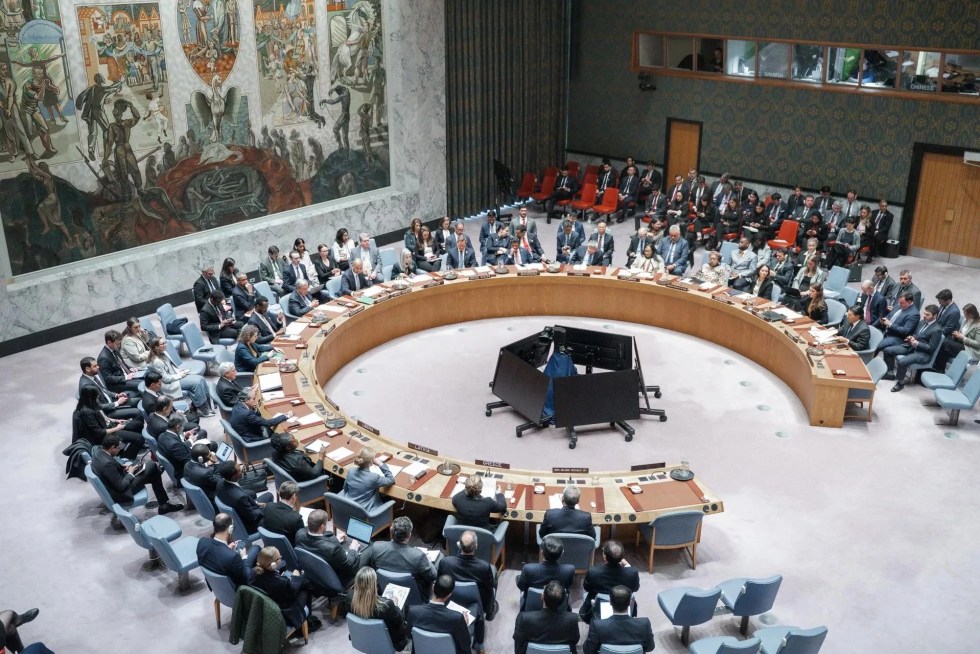
China labeled the attacks “shameless” and expressed concern they had occurred amid an ongoing diplomatic process.
France and the United Kingdom adopted a more cautious stance, criticizing Iran’s escalation and attacks in the Persian Gulf while stressing the urgency of returning to nuclear negotiations and clarifying they were not involved in the strikes.
Bahrain’s ambassador, Jamal Faris Al Rowaiei, condemned what he described as Iran’s missile attacks on vital installations and residential areas in Bahrain and other Gulf states as “cowardly,” warning they posed an “unprecedented” threat and reserving the right to respond in coordination with allies.
The session underscored not only the widening military confrontation but also a diplomatic rift among world powers, heightening concerns that the conflict could expand beyond its current front lines. EFE
jco-ecs-sk