Lima, (EFE).- President Keiko Fujimori began her five-year term on Tuesday, delivering an inaugural address in which she announced plans to grant the military greater authority to lead operations against organized crime, reform the prison system, and increase the minimum wage by 15%, from 1,130 to 1,300 soles (approximately 382 dollars).
During the swearing-in ceremony at the Peruvian Congress on the country’s national day, Fujimori, the daughter and political heir of former President Alberto Fujimori (1990-2000), marked the return of the Pro-Fujimori movement to the government.

Almost 26 years before, her father faxed his resignation from Japan, following the exposure of a massive corruption scandal in his administration.

Before she began her speech, a group of left-wing lawmakers walked out of the chamber, shouting, «Justice for the victims!» and holding up photos of victims of state violence during Alberto Fujimori’s government, which led to his conviction and a 25-year prison sentence for crimes against humanity.
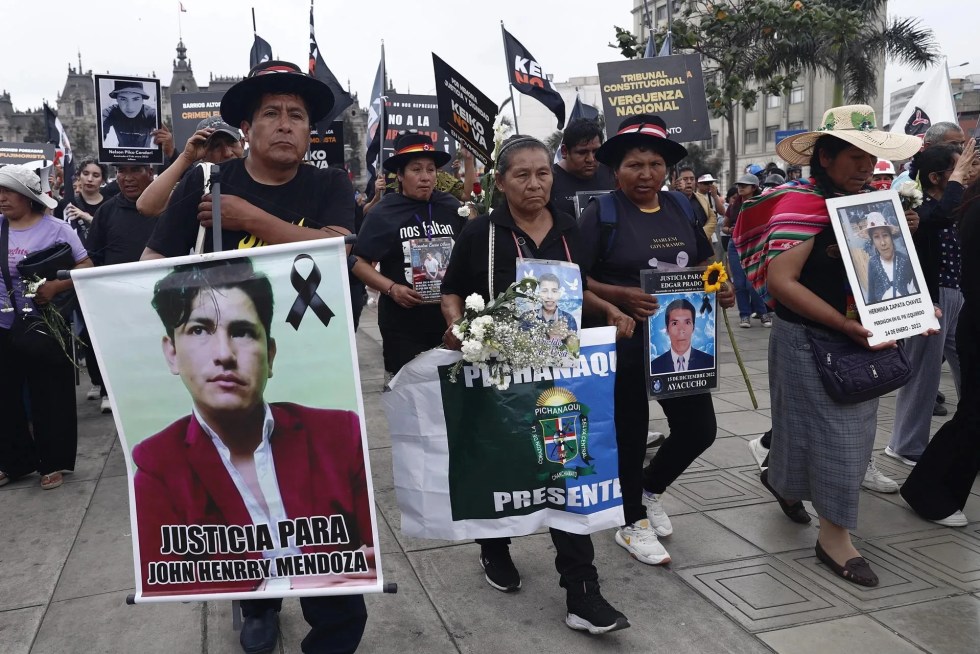
The lawmakers also held up photos of those killed in the crackdown on protests following the ouster of President Pedro Castillo (2021-2022).
During the speech, Fujimori confirmed that she would focus on public safety and preparing the country for possible flooding caused by the El Niño phenomenon.
The newly elected president stated that she is inheriting a country «marked by neglect» and «a weakened government,» with an estimated annual loss of 40 billion soles (11.75 billion dollars) due to inefficiency.
«This term commits us to working for the well-being of all Peruvians, especially those who have been left on the margins of development for far too long,» said Fujimori.
She pledged to adhere strictly to her five-year term, «not a year more,» in response to her opponents’ fears that she might seek to remain in power indefinitely.
Fujimori announced that she would ask Parliament for legislative authority to address insecurity with measures such as giving the military control over operations against organized crime in areas declared to be in a state of emergency and reforming the prison system.
Minimum wage increase
In terms of the economy, she took the unexpected step of raising the minimum wage by 15%, which will now reach 1,300 soles (382 dollars).
«The increase will be accompanied by a one-time compensatory grant for micro and small businesses to help them bring workers into the formal sector and address the higher labor costs responsibly,» she said.
Fujimori also promised to double the pension program for impoverished elderly individuals and to cut child poverty in half, from 22% to 11%.
She announced the allocation of «extraordinary resources» to prepare the country for El Niño, a periodic phenomenon caused by ocean warming that brings torrential rains and flooding to Peru and Ecuador’s coasts.
Fiscal discipline, freedom of the press, and reconciliation
Fujimori expressed her commitment to fiscal discipline and freedom of the press while calling for reconciliation. However, she made no mention of a possible pardon for former President Pedro Castillo.

Castillo was sentenced to 11 years and five months in prison for his failed coup attempt in late 2022.
A pardon is demanded by Peru’s left and former presidential candidate Roberto Sánchez as a condition for recognizing Fujimori as president.
Relatives of the over 50 people killed and injured in the wave of protests between late 2022 and early 2023 demonstrated outside the security perimeter, demanding justice and punishment for those responsible.EFE
fgg/dgp/mcd