By Antoni Belchi
Miami, US, July 10 (EFE).- FIFA has opened a technology command center in Miami to oversee cybersecurity, stadium operations, and live broadcasts during the World Cup 2026, with officials saying it faces up to 400 million attempted online attacks every day.

Located at FIFA’s headquarters in Coral Gables, Florida, the Technology Command Center (TCC) coordinates operations around the clock during the tournament, jointly hosted by the United States, Canada, and Mexico.
«It represents the biggest technological challenge in the history of sport because of the scale of operating across three countries simultaneously,» FIFA’s technology director, Nacho Fresco, told EFE.
According to Fresco, the center detects between 300 million and 400 million attempted cyberattacks each day and works closely with the US Federal Bureau of Investigation (FBI) to respond to potential threats.
He said FIFA chose to locate the center inside its headquarters rather than at an external facility to speed up decision-making during emergencies.
«We want to be as close as possible to FIFA’s leadership so that technical managers can make decisions extremely quickly in any crisis that may arise during the tournament,» he said.
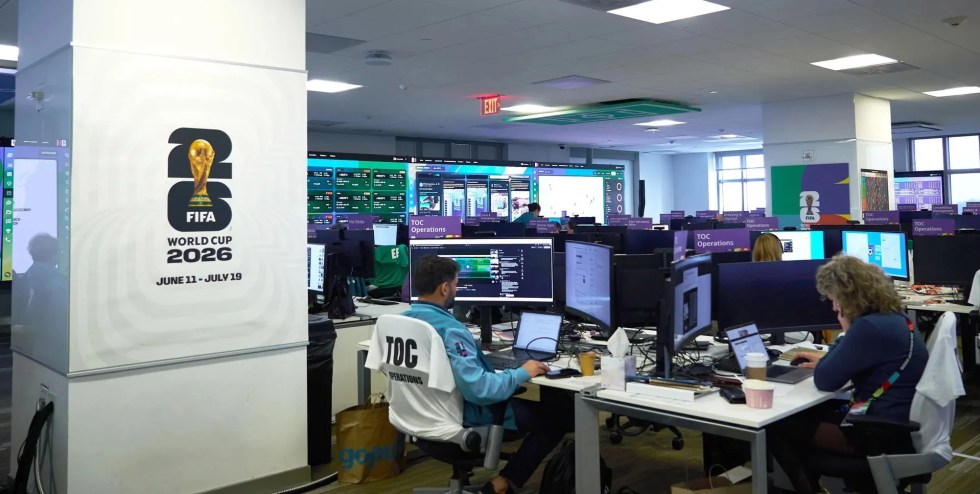
Around 350 data analysts, software developers and systems engineers monitor the tournament’s digital infrastructure and cybersecurity across all 16 World Cup stadiums.
The center also coordinates with the International Broadcasting Center in Dallas, Texas, which distributes the tournament’s television coverage worldwide.
Katie Reed, Lenovo’s director of internal operations for North America, said the scale of the operation far exceeds that of other major sporting events.
“From a global perspective, it is enormous compared with events such as the Super Bowl,” she told EFE. Lenovo is serving as FIFA’s official technology partner for the first time.
Technology on and off the pitch
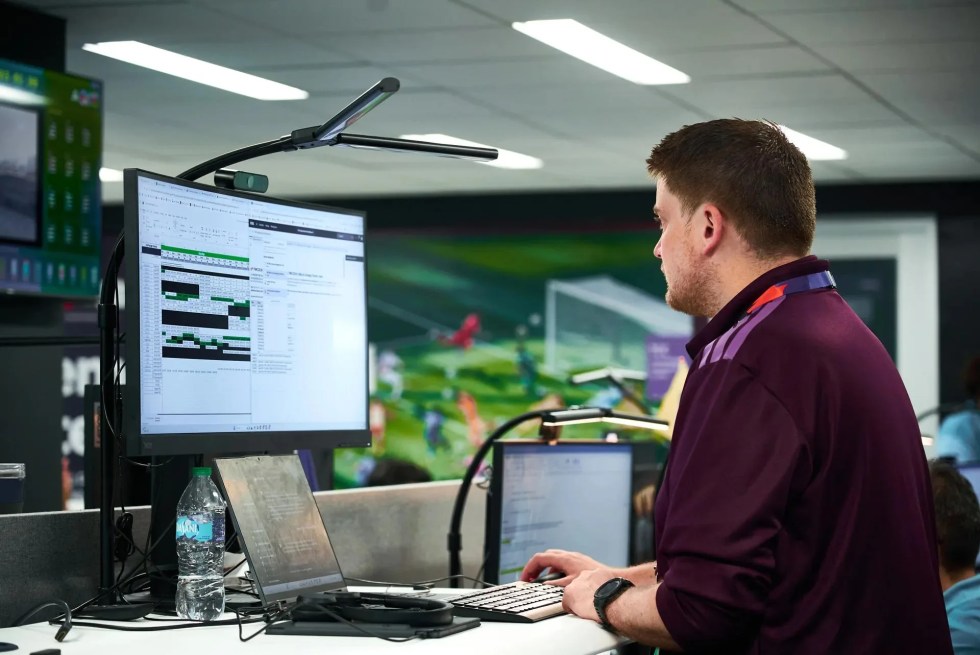
One of the most visible innovations supported by the command center is the RefCam, a camera mounted on referees that offers viewers a first-person perspective during matches.
Although Lenovo did not develop the camera itself, Reed said the company provided image stabilization technology that reduces vibration by about 60 percent, making the footage suitable for live broadcasts.
The center also processes real-time match statistics using artificial intelligence, generating predictive analytics and performance data that coaching staffs can use to prepare for future matches.
Players can access personalized performance reports through a mobile application, including heat maps, sprint speeds, and other physical metrics designed to help them analyze their performances after each game.
FIFA said it does not disclose which teams or players make the greatest use of the platform for confidentiality reasons.
The TCC also supports semi-automated offside technology by generating three-dimensional digital player models for broadcast reviews and operates FIFA’s AI Pro platform.
According to Reed, the system provides all participating teams with advanced match analytics within three hours of the final whistle, giving every federation access to the same level of technical information regardless of budget. EFE
ab-sk