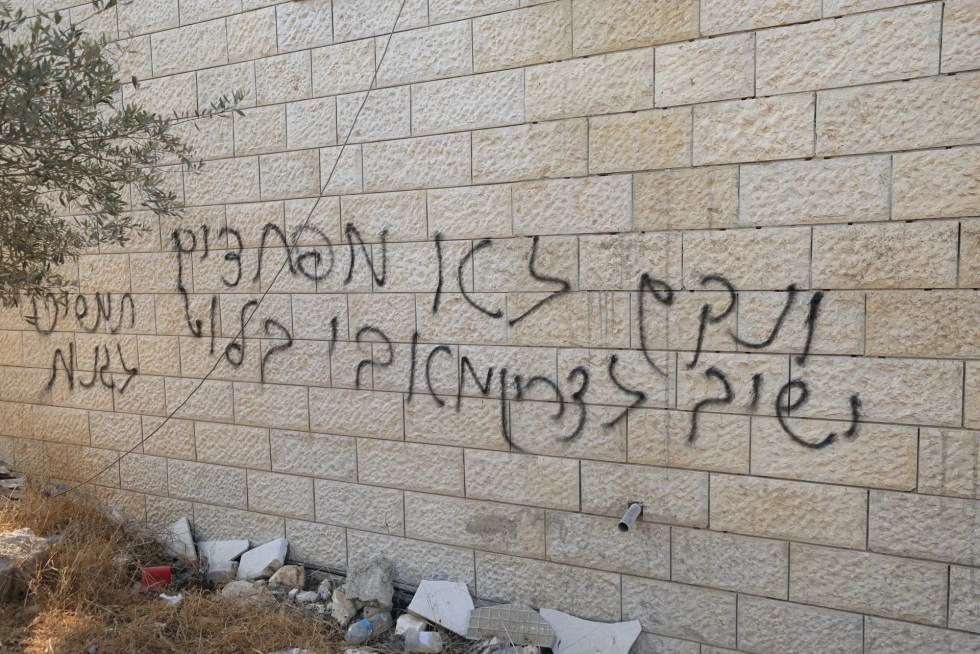
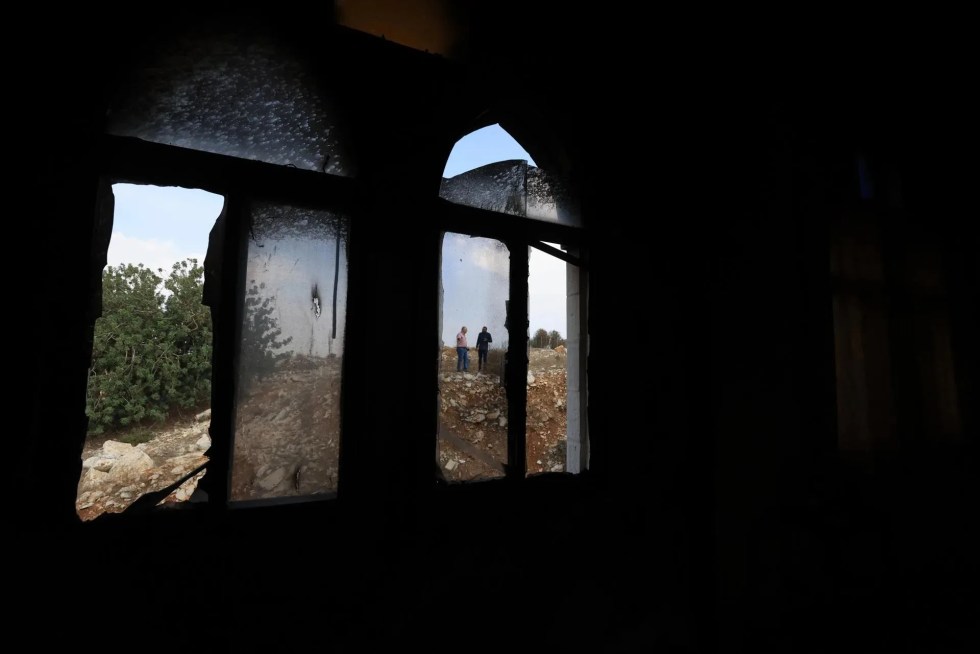
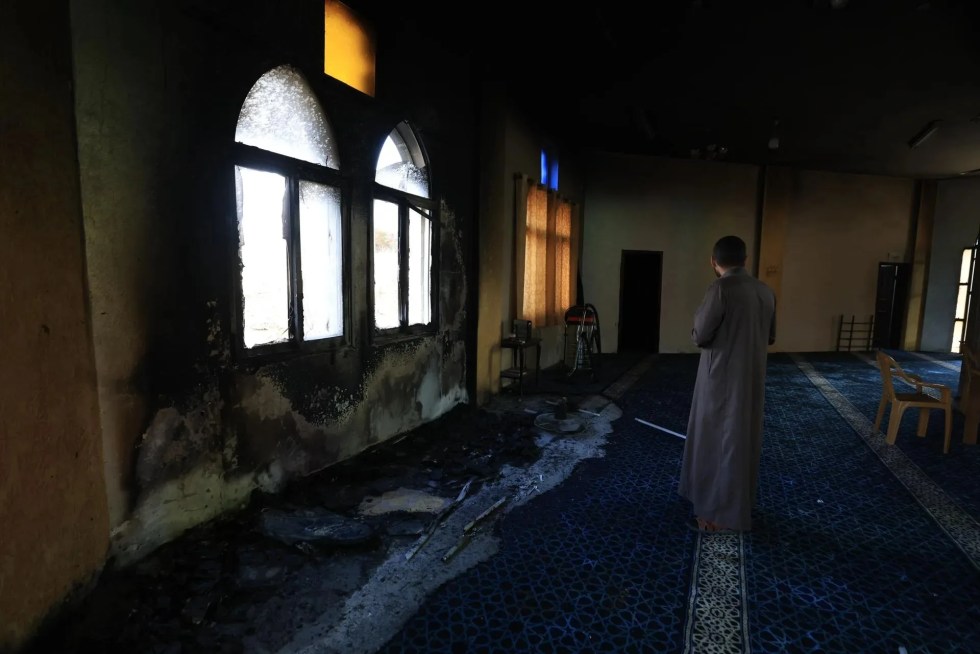
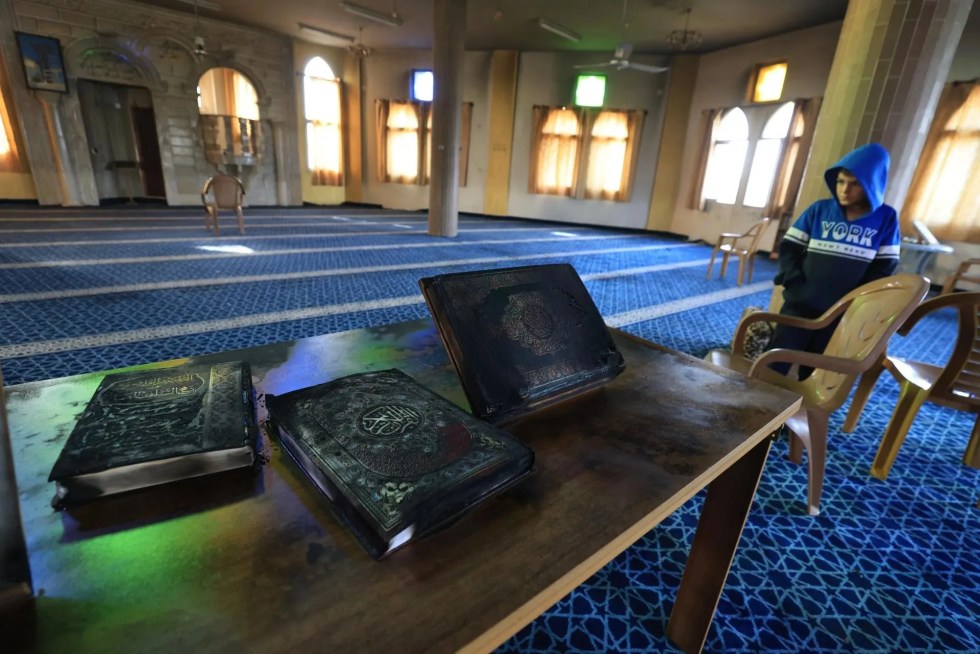
Jerusalem (EFE).- During the attack on the Hajja Hamida mosque on Thursday, a group of Israeli settlers burned the entrance to the sacred enclosure and painted racist slogans on its walls. This attack is one of over 500 recorded in October, which is indicative of the growing violence by Israeli settlers in the West Bank.
According to activist Nazmi al Salman, the settlers poured flammable materials on the entrance of the mosque in the early hours of Thursday. The mosque is located between the towns of Deir Istiya and Kafr Haris in the Nablus governorate (occupied West Bank).

Residents’ swift intervention prevented the fire from spreading throughout the building. Settlers also painted racist slogans against Arabs and Muslims.
As in recent days, these attacks have occurred in different locations. In Turmus Ayya, in the center of the West Bank, settlers uprooted olive trees of Abdullah Awad, who reported the incident on WhatsApp. Residents of Faraata, a city in the northwest of the West Bank, also claimed that settlers uprooted their trees.
Uncontrolled increase in violence
This attack on a mosque is one of many large-scale attacks that have marked October in the West Bank, coinciding with the olive harvest season.
On Wednesday, a group of settlers attacked industrial and agricultural facilities near Beit Lid, north of the West Bank, leaving several Palestinians injured and causing fires.
On Tuesday, settlers burned at least four trucks and injured several people east of Tulkarem, a city in the West Bank. Furthermore, attacks were reported in several villages in the hard-hit community of Masafer Yatta, south of Hebron, in previous days.
According to United Nations figures, October was the most violent month since 2013, with 536 incidents recorded, including physical attacks, burning of fields, destruction of olive trees, and restrictions on access to olive groves.
The aggressors are often uniformed settlers, many of whom are army reservists living in illegal settlements, who attack Palestinian populations with little to no intervention from the Israeli army or police, who usually side with the settlers, according to accounts from Palestinians and activists.
Furthermore, this new attack comes after Israeli Chief of Staff Eyal Zamir assured on Wednesday that the army is determined to «stop» attacks by Israeli settlers on Palestinian civilians, activists, journalists, and paramedics, which have intensified in different parts of the occupied West Bank.
«These acts contradict our values, cross a red line, and divert the attention of our troops from their mission of defending communities and carrying out operations. We are determined to stop this phenomenon and will act firmly until justice is served,» said Zamir after visiting the West Bank on Wednesday.
Condemnations of the attack
The Israel Defense Forces commander in charge of the West Bank, Avi Bluth, asked soldiers to intervene and prevent «any act of nationalist crime.»
However, in September, statements by Bluth were leaked to the press in which he allegedly said that every time a Palestinian attacked or injured a settler, their village would be punished, a statement that calls the high command’s approach into question.
Wednesday’s attack on the mosque prompted condemnation from the Israeli left-wing. Yair Golan, the leader of the Democratic Party, described the events as «an escalation of Jewish terrorism.» EFE
ime/dgp