By Jaime León
Tehran, Jan 19 (EFE).- Iran has suppressed the protests that began three weeks ago over the collapse of the rial and quickly turned into a clamor demanding the end of the Islamic Republic.

However, the underlying causes of the unrest remain unresolved, with rising prices for basic goods, households struggling to make ends meet, and economic policies that have failed to win public confidence.
State repression that caused “several thousand deaths” has driven protesters off the streets, but discontent has not subsided in a country where many believe that, with the world’s second-largest reserves of gas and oil and a highly educated population, living standards should be far better.
The depreciation of the rial and inflation of around 40 percent, the protests trigger, continue to push prices upward.
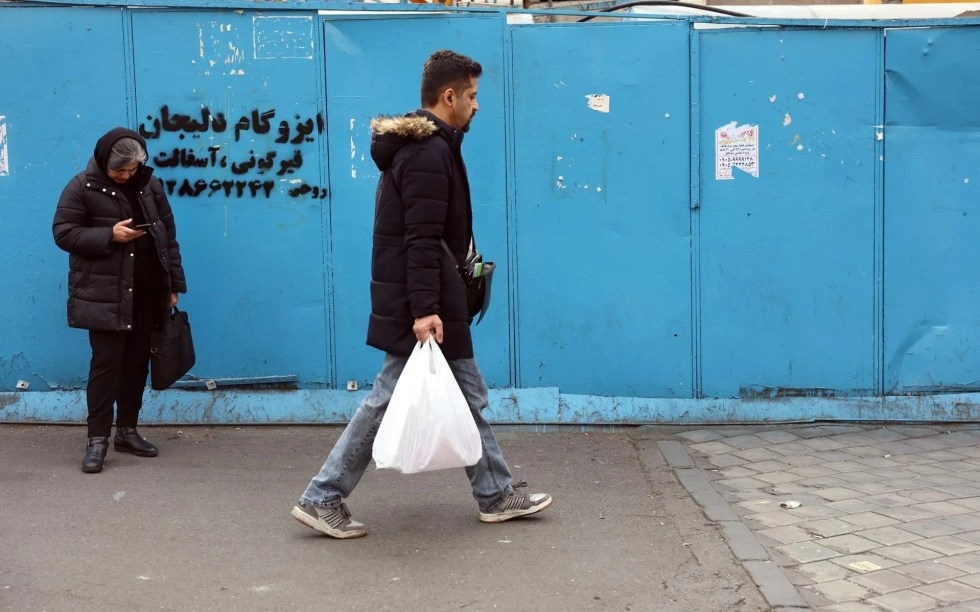
In just one month, the price of a bottle of cooking oil has doubled to 12.5 million rials (about 7.4 euros), while a carton of eggs now costs nearly twice as much at 3.15 million rials (1.8 euros) at the street exchange rate of 1.68 million rials per euro.
The official exchange rate is set at 1.18 million rials per euro.
“People have every right to be angry. You can’t live like this,” Mahin, a 57-year-old conservative and religious resident of Tehran who earns a living cooking and cleaning houses, told EFE.

She said she has not eaten meat for months because she simply cannot afford it. “We shouldn’t have to worry about food,” said Mahin, who wears the traditional Iranian chador, the black garment that covers the entire body except the face.
Mahin is among the millions of Iranians who receive a monthly supermarket food credit worth 10 million rials (about 5.9 euros), but she considers the subsidy “worthless.”
She did not take part in the protests that began on Dec. 28, though not for lack of desire.
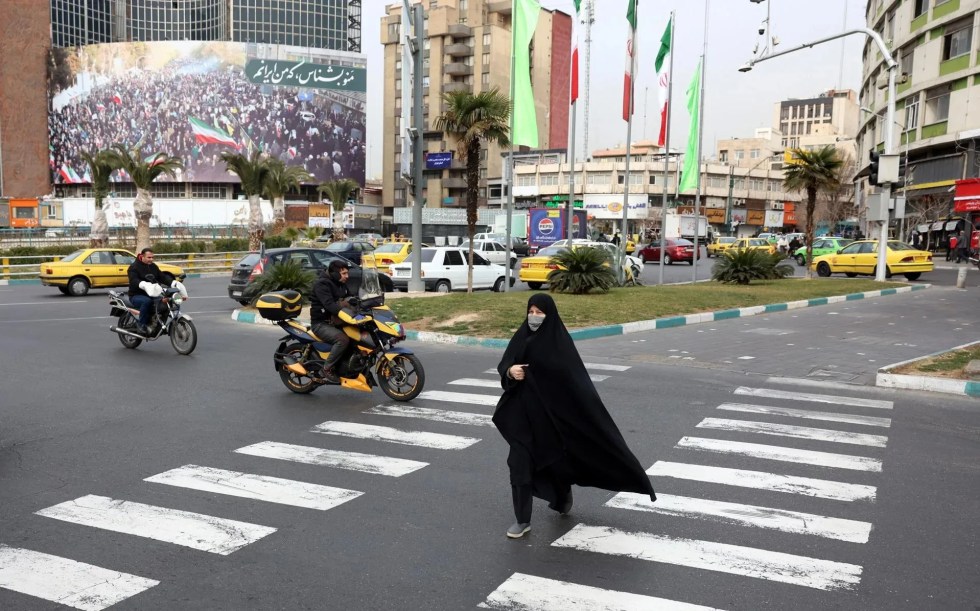
“I really wanted to go out and protest, and so did my daughter. But in the end we didn’t, because of fear. Many people were killed in my neighborhood,” said the resident of Tehranpars, in the east of the capital.
The subsidies are part of a plan by the government of President Masoud Pezeshkian to redirect $10 billion annually to households, funds that were previously used to subsidize certain imports at a preferential exchange rate.
This comes in a country where the minimum wage stands at 105 million rials (about 62 euros) and the average income is around 450 million rials (268 euros at the street rate).
The program aims to “preserve households’ purchasing power, control inflation, and guarantee food security,” Deputy Welfare Minister Yaghoub Andayesh said Sunday, adding that 57.5 million Iranians, out of a population of 91.5 million, have benefited from the aid.
But the assistance appears to satisfy few.

Mahmoud, another Tehran resident, received the subsidy along with his wife and two daughters, a total of 40 million rials (23.8 euros), yet still had to spend an additional five million rials of his own money to buy two five-kilogram bags of rice, a staple of the Iranian diet.
“The government has to do more,” he told EFE, adding that he believes the measure has contributed to further price increases.
The government has also proposed tax reductions through exemptions for monthly salaries of up to 400 million rials, up from 240 million rials last year, a move that has likewise failed to generate optimism.
Criticism of the US
In response to criticism, authorities have sought to shift blame. Pezeshkian pointed to the United States on Saturday as “one of the main factors” behind “the difficulties in the lives of the beloved people of Iran,” citing sanctions that limit Iran’s ability to trade internationally, particularly its exports of oil and gas.
That argument does not convince Reza, a 30-year-old petrochemical engineering graduate who now works as a taxi driver in Tehran.
“I should have a better life. I’m trying to emigrate to the Netherlands to find work there,” he told EFE, saying he sees “no future” if he remains in Iran and blaming the authorities for the situation.
“There are sanctions, that’s true, but Iran has been hostile toward many countries for a long time. It has to find a way to repair its relations with the international community,” he said.
Reza believes the country needs a change in policies, something he considers unlikely under the Islamic Republic. EFE
ash-jlr-sk