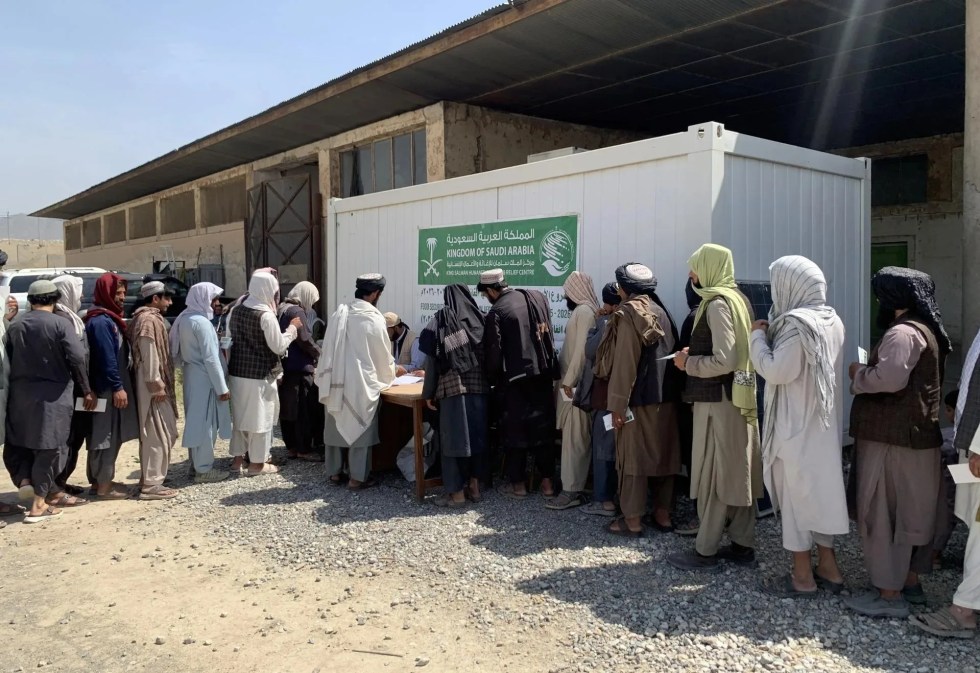
![[FILE] Afghan families receive aid donated by the King Salman Charity, in Kandahar, Afghanistan, 26 April 2026. The King Salman Charity Foundation distributed food assistance to 3,000 needy people in Kandahar, aiming to support vulnerable families, internally displaced persons, and returnees, easing hardships and improving living conditions across affected communities there overall. (Afganistán) EFE/EPA/QUDRATULLAH RAZWAN](https://i0.wp.com/efe.com/wp-content/uploads/2026/06/rss-efe67013ea19b2938eec520d3e7190bf794b8a73e51w.webp?fit=1920%2C1280&ssl=1)
Kabul, June 5 (EFE).- In many remote provinces of Afghanistan, thousands of boys and girls who are still able to attend school do so without a building to go to. They study outdoors, often without classrooms, desks, or even textbooks.
Under the scorching summer heat and freezing winter conditions, children who manage to access education under Taliban rule attend classes without basic infra, a reality that further deepens an already severe education crisis marked by poverty, underfunding, and restrictions imposed since the Islamist militia returned to power in 2021.

After that, Afghanistan has been reeling under a worsening financial crisis following the suspension of international aid and the freezing of foreign reserves.
At the same time, its education system continues to bear the burden of decades of war, poverty, and neglect.
“We still need school buildings in several provinces, districts, and remote areas of the country. The Ministry of Education has tried to address these problems gradually,» Zabihullah Himat, spokesperson for the Taliban-run Ministry of Education, told EFE.
Schools Without Walls
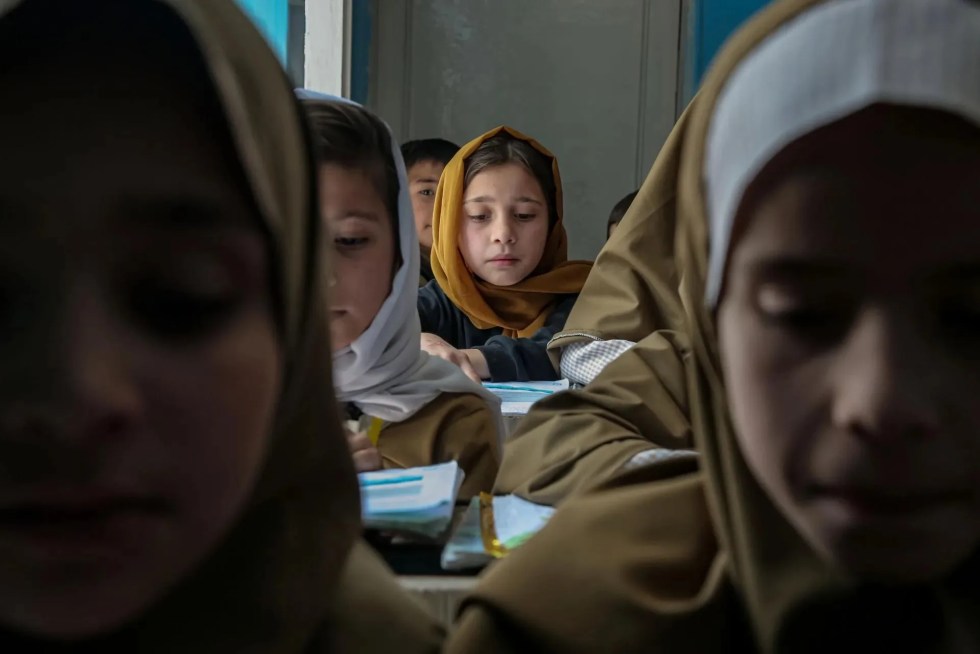
For many families in rural Afghanistan, the lack of school buildings is not merely an administrative issue but part of their children’s daily reality.
One of the clearest examples is in Herat, a seismically active province in western Afghanistan, where teachers and local residents say many children remain without classrooms after earthquakes destroyed villages and school buildings.
«Although the Ministry of Education has provided tents and temporary shelter materials for some schools, thousands of children are still studying in open spaces because their schools have no buildings,» district education director Bashir Zubair Sadat told EFE.
In the scattered villages of Shindand district, lessons are often held in dusty fields or temporary tents. Parents and community leaders say these conditions are already affecting children’s health.
«Our children travel long distances to go to school and study in both hot and cold weather without adequate school buildings,» local leader Mohammad Tahir Popalzai told EFE. «Many children often fall ill or complain of leg pain.»
Studying Under the Sun
Mohammad Laiq, a student from Shindand, described a school where even the most basic necessities are lacking.
«Our school has no building. There’s only a structure that can accommodate a small number of students, while the rest of us sometimes sit in tents and other times directly under the sun,» he told EFE.
The United Nations Children’s Fund (UNICEF) estimates that nearly half of Afghanistan’s public schools either lack usable infrastructure or have been damaged or destroyed after decades of conflict.
In Kandahar, teachers consulted by EFE said many schools continue to operate without permanent buildings, even in areas close to provincial capitals.
«We have a complete database of these schools. There are hundreds of schools that lack buildings and adequate textbooks,» a Taliban education official said on condition of anonymity.
No Textbooks
The lack of classrooms is compounded by a shortage of textbooks. Students and teachers say many lessons rely on outdated, damaged, or shared books.
«We are missing most of the textbooks, and the few we have are old, have no covers, and are missing pages,» said Zaman, an 11-year-old student at a public school in Achin district.
The Taliban government told EFE it has distributed around 40 million textbooks over the past four years and is currently printing and distributing another 10 million.
A joint UNESCO-UNICEF report found that more than 90 percent of Afghan children aged 10 cannot read or understand a basic text, a crisis the agencies describe as «schooling without learning.»
With literacy rates stagnant at around 37 percent, the lack of classrooms, teaching materials, and qualified staff threatens to leave another generation of Afghan children with little more than a nominal education, even among those who still manage to attend school. EFE
lk-lgm-sk