By Esneyder Negrete
Quibdó, Colombia (EFE).- While authorities work to complete the headcount of victims of Monday’s 7.4-magnitude earthquake in Colombia, affected families in Quibdó, the capital of Chocó, have their own assessment: uninhabitable homes, walls on the verge of collapse, and an uncertain future.

Nilson Hinestroza and Yerlin Perea live just a few blocks away in the Las Dalias sector of the Jardín neighborhood. They never imagined a catastrophe would link their stories and now see vanish in a matter of seconds what they’ve built up over years.
Nilson welcomed EFE into one of his home’s rooms; he now carefully passes through the rubble, noting where the structure gave way.
He explained that engineers who inspected the house were unequivocal: «The loss is total. There isn’t a single wall that can be salvaged. They all have to be demolished,” Nilson told EFE.
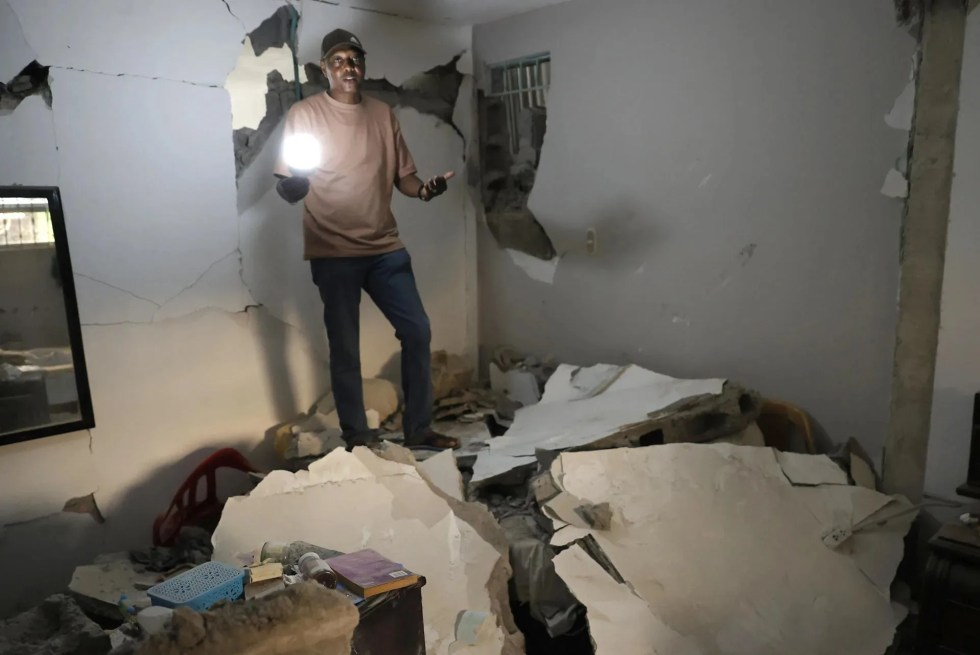
The floor is covered with concrete fragments, several walls have collapsed, and cracks extend from the ceiling to the floor.
Five people lived in the house, but only he and his wife were there at the time of the earthquake, which prevented a greater tragedy as they both managed to escape before some of the walls collapsed.
Engineers estimated that rebuilding the house would cost between 60 and 70 million Colombian pesos (19,000 and 22,000 dollars), an amount the family cannot afford.
They now need to find a place to rent and a place to store their salvaged belongings. In addition, they must wait for the debris to be cleared so they can try to start over.
«I’ve received a food package and two mats, but we don’t know what’s going to happen. We’re hoping for support from the government, information that will let us know what to do, but so far, we haven’t received a response,» Nilson said.
Minutes after they left the house, the ground shook again. Although the tremor lasted only a few seconds, it interrupted the conversation and served as a reminder that the emergency remains in a city that has experienced aftershocks since Monday.
Another house, the same tragedy
A few blocks away, a group of neighbors has gathered in a makeshift courtyard. Their conversations revolve around the same questions: Where will they spend the night? When will they be able to return home? Who will help them rebuild?
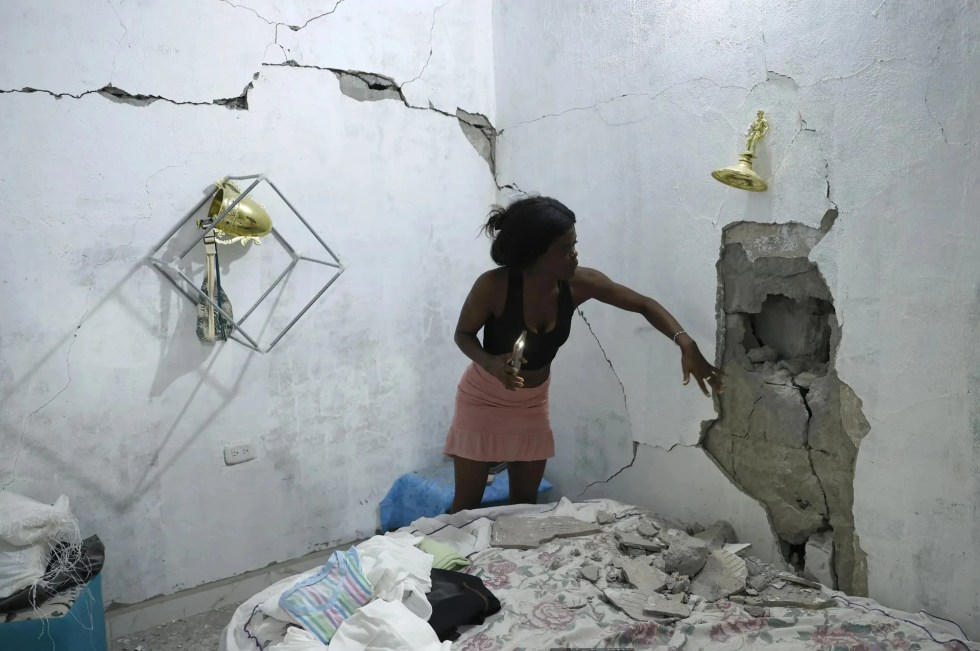
Yerlin Perea stands in the middle of the group, speaking calmly, even though her words paint a devastating picture.
«The house is practically destroyed. There’s nothing left to salvage,» she told EFE.
Her family consists of three households, her mother’s and her two brothers’, a common arrangement in many working-class neighborhoods of Quibdó, where several generations share the same plot of land, however, all three homes collapsed.
When listing the community’s needs, Perea avoids mentioning food. She says neighbors have found ways to organize through communal kitchens and support networks, which have allowed them to survive the first few days of the emergency.
What they really need, she said, are building materials. “We’re asking the government to help us with sand, cement, rebar, and concrete blocks. We’ll take care of the food ourselves.”
In Quibdó, authorities are still trying to assess the impact of the earthquake. In this neighborhood, the scale of the disaster is not measured by official reports, but by the empty spaces left by destroyed homes and the uncertainty of survivors trying to rebuild their lives. EFE
en/dgp